ISSN Number
ISSN 2771-019X
-

-

Impact Factor
1.2*

ISSN Number
ISSN 2771-019X
Impact Factor
1.2*
1MicroTech Medical (Hangzhou) Co., Ltd., China.
2School of Public Health, Southeast University, Nanjing, China.
3Hulhumalé petcare facility, Malé, Maldives.
4Department of Surgery, Edward Francis Teaching Hospital, Banjul, The Gambia.
MicroTech Medical (Hangzhou) Co., Ltd., China.
Email: maudline25@outlook.com
Received : Feb 28, 2025,
Accepted : Mar 20, 2025
Published : Mar 27, 2025,
Archived : www.jclinmedcasereports.com
Continuous Glucose Monitoring (CGM) has revolutionized diabetes management by offering real-time insights into glucose fluctuations. Despite its widespread adoption, the bibliometric landscape of clinical trials assessing the impact of CGM remains unexplored. This study systematically evaluates the scientific trends, leading contributors, thematic evolution, and research gaps in CGM-related clinical trials from January 2014 to November 2024. A total of 77 clinical trials were included in the analysis. A bibliometric analysis was conducted on clinical trials retrieved from PubMed using a structured search strategy. Only Randomized Controlled Trials (RCTs) and clinical trials published in English were considered. Bibliographic data, including publication trends, prolific authors, co-occurrence of keywords, and country-wise scientific contributions, were extracted and analyzed using bibliometric mapping tools. Emerging research hotspots were identified to highlight evolving research hotspots. Publication trends revealed a fluctuating but overall upward trajectory, with a peak observed in 2023. The United States contributed the most, followed by China, New Zealand, and Denmark. Beck RW, Calhoun P, and Parkin CG were among the more prominent authors. Keyword analysis indicated a shift from hypoglycemic agents and self-monitoring of blood glucose to real-time CGM, and glycemic variability. This bibliometric study provides a comprehensive overview of clinical trials assessing the impact of CGM on diabetes management. While CGM research has expanded significantly, gaps remain in long-term outcome studies, integration with artificial intelligence, and patient adherence factors. Future research should focus on personalized CGM-driven therapeutic strategies, real-world effectiveness, and cost-effectiveness to optimize diabetes care.
Keywords: Diabetes mellitus; Continuous glucose monitoring; Bibliometric analysis; Glycemic outcomes.
Copy right Statement: Content published in the journal follows Creative Commons Attribution License (http://creativecommons.org/licenses/by/4.0). © Novihoho MA (2025).
Journal: The Journal of Clinical and Medical Images, Case Reports (JCMICR) is a fantastic resource for keeping up with the latest clinical advancements and for publishing case reports and clinical images related to a variety of medical illnesses.
Diabetes mellitus, a chronic metabolic disorder characterized by the body’s inability to actively regulate blood glucose levels effectively, remains a significant global health challenge. Diabetes is one of the leading causes of death and disability worldwide, and affects people regardless of country, age group, or sex. In 2021, there were 529 million (95% UI 500–564) people of all ages, worldwide, living with diabetes, yielding a global age-standardized prevalence of 6.1% [1].
Blood glucose serves as the fundamental source of energy in the body and plays a pivotal role in maintaining normal physiological functions. Abnormal fluctuations in blood glucose levels are closely linked to the onset and progression of numerous diseases, such as diabetes mellitus and hypoglycemia. Consequently, blood glucose monitoring has emerged as a crucial and indispensable tool in clinical management [2].
The traditional approach to glucose monitoring, which relies on Self-Monitoring of Blood Glucose (SMBG) (i.e., finger-prick blood tests) helps achieve better glycemic control in patients with diabetes on insulin therapy by facilitating appropriate titration of insulin doses based on the blood glucose levels. Such improvements in glycemic control by SMBG have been shown in patients with type 1 diabetes [3] and in those with type 2 diabetes treated with insulin [4]. However, the drawbacks of SMBG are well-known and include pain, inconvenience, masking important nuances in glycemic control, such as the extent and timing of hypoglycemia or the presence of clinically significant glucose variability in capturing the full spectrum of glycemic fluctuations throughout the day and night [5]. This growing burden underscores the need for advanced strategies in glucose monitoring and management. New methods have been introduced iin recent years, namely Continuous Glucose Monitoring systems (CGM) to overcome some of the limitations of SMBG and provide a continuum of glucose data, which include Real-Time Continuous Glucose Monitoring (rtCGM), and Flash Glucose Monitoring (FGM) also known as intermittently scanned continuous glucose monitoring (isCGM) systems [6].
Continuous Glucose Monitoring (CGM) has emerged as a transformative technology that offers a more comprehensive understanding of glucose dynamics and the management of diabetes mellitus, enabling healthcare providers with unparalleled insights into real-time glucose fluctuations and trends to empower patients with type 1 or type 2 diabetes to manage their condition more effectively [5,7-9]. Several clinical trials have demonstrated the efficacy of CGM; the large randomized DIAMOND trials showed improved HbA1c, reduced time spent in the hypoglycemic and hyperglycemic ranges and reductions in moderate to severe hypoglycemia in individuals with Multiple Daily Injections (MDI)-treated T1DM and T2DM using rtCGM compared with traditional SMBG. In the IMPACT study, the use of an earlier generation FreeStyle Libre system was associated with a 38% reduction in time spent in hypoglycaemia (<70 mg/dL), with increased time in range and reductions in glycemic variability. Similar results were reported in the REPLACE study, which showed an association between FreeStyle Libre use and a 43% reduction in time spent in hypoglycemia in a large T2DM population treated with intensive insulin therapy [10].
Given the rapid widespread advancements in CGM technology and its growing adoption and advantages over traditional monitoring methods, understanding its clinical application through the lens of historical and recent clinical trials is essenessential. By analyzing clinical trials in the past 10 years (2014–2024), this bibliometric analysis aimed to identify leading authors, keyword frequency and co-occurrence, and scientific production of countries and emerging opportunities in the integration of CGM into diabetes care. Such findings will guide future research, policy formulation, and clinical practice, ultimately improving diabetes care.
Database search and document selection
A comprehensive search was conducted in PubMed (https://pubmed.ncbi.nlm.nih.gov) a free resource supporting the search and retrieval of biomedical and life sciences literature with the aim of improving health–both globally and personally. A systematic search strategy was devised to retrieve relevant literature published from the 1st of January 2014 to the 5th of November, 2024 on the effect of Continuous glucose monitoring systems on diabetes patients. The following search string was employed: (Diabetes mellitus OR Type 1 Diabetes OR Type 2 Diabetes AND Continuous glucose monitoring system OR Continuous glucose sensors OR Subcutaneous glucose monitoring OR Real-time glucose monitoring system OR Flash glucose monitoring system OR Intermittent glucose monitoring OR CGM OR rtCGM OR FGM AND Glycemic control OR Glycemic outcomes) while limiting document types to “Clinical Trial” or “Randomized Controlled Trial” in Humans. Only articles published in English were considered. The study selection process is depicted in the flow chart generated according to Preferred Reporting Items for Systematic Reviews and Meta-Analyses (PRISMA) guidelines (Figure 1).
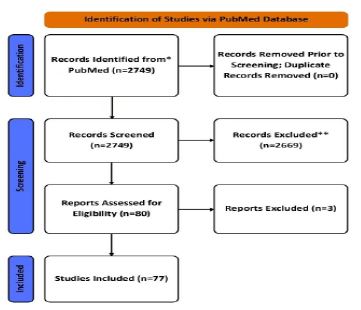
After retrieving relevant articles from PubMed, we extracted bibliographic data into a text file. This data encompassed publication years, author names, journal titles, article titles, abstracts, and keywords. We ensured the absence of duplicate articles. Subsequently, we manually inspected the extracted bibliographic data for articles on the clinical use of CGM in diabetes mellitus; these clinical use encompass various aspects such as improvements in blood glucose control following CGM use, reduction in HbA1C and glycemic excursion following the adoption of CGMs, increase in target “time in range” since the adoption of CGMs, the utilization and interpretation of CGM-related metrics, and the integration of CGM with artificial pancreas (closed-loop systems). Documents outside the research scope; papers on the clinical or technical performance of CGMs, protocols, clinical trials not focused on the clinical use of Continuous glucose monitoring systems, and unrelated research topics were excluded. Following manual screening, a total of 77 papers were included in the bibliometric analysis.
Bibliometric analysis
Bibliometric analysis was performed using the R Studio software tools: Bibliometrix and Biblioshiny [11]. Biblioshiny was used to analyze and visualize the leading contributors, thematic map and evolution, and the keyword frequency.
Publishing trends
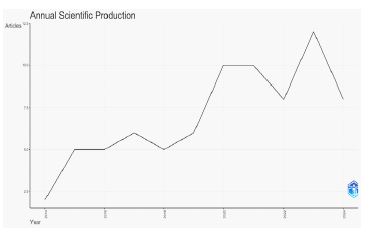
An erratic publishing pattern of clinical trials concerning the topic is apparent from Figure 2. Short declines follow brief spikes in publications. Nevertheless, the trend line depicted in the graph indicates an overall upward trend in the publication of clinical trials on the research topic. The most significant surge was witnessed between 2019 and 2020 followed by a decline in 2022. The peak number of papers was observed in 2023 in PubMed.
Most relevant authors
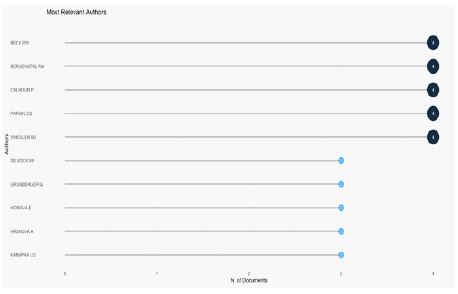
The most prominent authors in terms of the number of clinical trials on the topic are Beck RW, Calhoun P, Parkin CG, Wheeler BJ, who had four publications, closely followed by De Bock Mi, Grunberger G, Horová E, Hásková A and Kanapka LG who had three publications. The top 10 most relevant authors accounted for 45% of the total publications analyzed in this study (Figure 3).
Analysis of topic trends
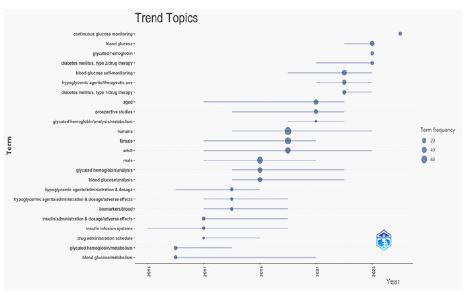
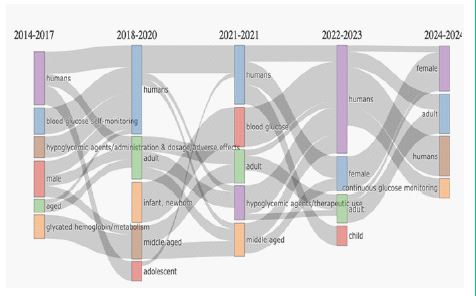
The data shows a persistent interest in glycated hemoglobin/blood glucose analysis. These subjects have continuously dominated the literature, with recurring focus noted at various points in time. The recurrent use of the same words from 2020 and 2023 suggests that certain research fields are still being prioritized. This implies that these topics remained relevant over time.
Prior to 2019, blood glucose control treatments like hypoglycemic medications were the main focus. After 2019, blood glucose self-monitoring became standard practice, and after 2023, continuous glucose monitoring took over. Between 2019 and 2020, the data shows that the focus group being studied in clinical trials switched from male to female diabetic patients. Between 2022 and 2023, there was a similar change in research attention away from Type 1 diabetes and toward Type 2.
Overall, these findings demonstrate a consistent interest in investigating glucose monitoring, blood glucose, type 2 diabetes, and glycated haemoglobin over time, with a notable change in methods of monitoring explored and specific areas of attention within each year (Figure 4).
Thematic evolution
Figure 5 depicts the most used terms during various periods. Before 2018, the most frequently used terms were aged, humans, blood glucose self-monitoring, hypoglycemic agents/ administration & dosage/adverse events, male and glycated hemoglobin/metabolism. These keywords indicate a research focus on a foundational understanding of diabetes and mitigating its impact on glycated hemoglobin metabolism using blood glucose monitoring methods and hypoglycemic agents.
Thematic map
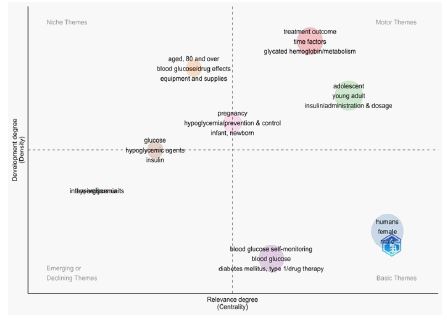
In this bibliometric study, the thematic map provides an insightful representation of research trends and priorities in the analyzed field. The horizontal axis (centrality) measures the relevance of themes to the broader research domain, while the vertical axis (density) reflects the level of development or internal cohesion of the themes. Each quadrant on the map offers distinct implications about the role and status of various themes in the field.
Motor themes, located in the top-right quadrant, are highly relevant and well-developed. In this map, themes such as treatment outcome, time factors, glycated hemoglobin/metabolism, adolescents, young adults, and insulin/administration & dosage represent active and central areas of research. These themes drive the field and form the basis for significant advancements in knowledge and practice, particularly in diabetes management. For example, glycated hemoglobin served as the key indicator of glycemic outcome in adolescents and young adults with diabetes. Similarly, insulin/administration & dosage reflects foundational work in optimizing treatment strategies, including technological innovations like insulin pumps. Researchers focusing on these themes are positioned to make high-impact contributions to the field.
Niche themes, situated in the top-left quadrant, are well-developed but have lower relevance to the broader research domain. For example, aged, 80 and over, blood glucose/drug effects, and equipment and supplies are specialized areas that are important in specific contexts, such as geriatric care or the role of medical technologies in managing diabetes. While these areas show high internal development, they are relatively isolated and could benefit from greater integration with more central themes to increase their impact.
The bottom-left quadrant represents emerging or declining themes, which are both underdeveloped and of limited relevance. Themes such as hyperglycemia, and intensive care unit represent emerging areas in the research of the clinical use of CGM. Current literature reports that CGM reduces nursing workload and enhances patient safety when integrated with validated insulin protocols in intensive care units [12].
Finally, basic themes in the bottom-right quadrant are foundational concepts with high relevance but low internal development. These include humans, females, males, blood glucose self-monitoring, and diabetes mellitus type 1/drug therapy. These themes serve as essential frameworks that support broader research but are not highly specialized. Increasing their density through further study could enhance the overall depth and quality of research in the field.
Additionally, themes positioned between quadrants provide interesting insights. For example, themes such as pregnancy, hypoglycemia/prevention & control, and infant/newborn, situated between motor and niche themes, indicate moderately developed and relevant areas that could evolve into motor themes with further interdisciplinary connections and research activity. Similarly, themes like blood glucose, hypoglycemic agents and insulin in the intermediate zone between emerging and niche themes may grow relatively isolated overtime. Overall, this thematic map highlights the need for a strategic approach to advancing research by focusing on motor themes while nurturing promising niche and emerging topics (Figure 6).
Scientific production analysis of countries
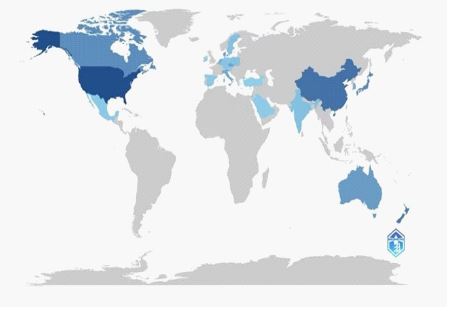
Figure 7 depicts the scientific production of various countries, ranging from 1 to 96 publications. The intensity of the blue color indicates the number of published clinical trials on the research topic. USA published the maximum number of clinical trials on the topic (i.e., 96), followed by China with 68 publications. The other countries with more than 50 publications were New Zealand (60), Denmark (55), and Japan with 51 publications (Figure 7).
Most productive sources
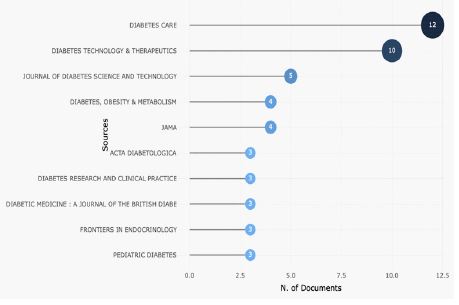
The most relevant sources in terms of the number of clinical trials on the topic is “DIABETES CARE” (12 publications) followed by “DIABETES TECHNOLOGY & THERAPEUTICS” (10 publications). The top 10 most relevant journals are illustrated below in Figure 8.
The top-10 frequently used keywords
In Figure 9, the top-10 frequently used keywords were listed to explain keyword co-occurrence. Keywords such as “human” (77), “female” (55), “male” (48), “adult” (42), “middle aged” (36), “blood glucose self-monitoring” (31), “glycated hemoglobin/analysis” (26), “aged” (24), “blood glucose” (23), and “adolescent” (22)” were reportedly the most frequently used keywords by authors.
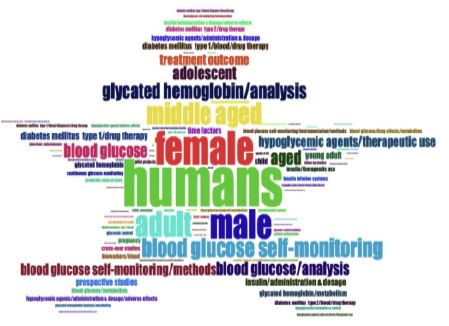
The bibliometric analysis provides valuable insights into the research landscape surrounding the impact of continuous glucose monitoring system on diabetes management. A comprehensive understanding of the field emerges by examining publication trends, authorship patterns, keyword cooccurrence, thematic evolution, and country-wise scientific production. The annual production of scholarly articles in this field exhibited an upward trend overall, with a significant and substantial surge observed in 2023. In the analysis of the scientific production of countries, the United States emerged as the leading contributor in terms of the number of publications. The keywords collectively represent a diverse range of research methodologies and topics.
Keywords such as “female” (55), and “glycated hemoglobin/analysis” (26), were among the top keywords, suggesting their significance as hot topics in this research field over the past decade.
There are some potential reasons why females might appear more prominently in certain studies. These include differences in diabetes prevalence, hormonal influences, and behavioral factors that may influence enrollment or study design. CGM is often studied in pregnant women with gestational diabetes or pre-existing diabetes due to the unique challenges of managing glucose levels during pregnancy. This naturally results in more studies centered on female patients. Women experience hormonal changes across menstrual cycles, pregnancy, and menopause, which can significantly affect glucose levels and insulin sensitivity. This makes them a key demographic for understanding CGM’s effectiveness in managing glucose variability. This study also reported on the interplay between CGM and hypoglycemic agents. Several studies have explored the potential of continuous glucose monitoring data to guide the optimization of hypoglycemic agent therapy, including insulin, metformin, and other oral antidiabetic medications [13-15]. Also, the use of continuous glucose monitoring has been shown to improve the titration of insulin therapy, leading to better glycemic control and reduced hypoglycemic events [16]. This research reported on the key role played by Glycated hemoglobin (HbA1c) as a primary indicator for improved glycemic control in CGM clinical trials. HbA1c is not only a useful biomarker of long-term glycemic control but also a good predictor of lipid profile; thus, monitoring of glycemic control using HbA1c could have additional benefits of identifying diabetes patients who are at a greater risk of cardiovascular complications [17]. HbA1c results guide clinicians in tailoring treatment plans, including the initiation, intensification, or modification of medications such as insulin, oral hypoglycemic agents, or combination therapies.
To the best of our knowledge, no bibliometric analysis on the research topic assessing clinical trials has been published so far. However, a systematic bibliometric study analyzing the clinical practice of CGM in diabetes mellitus from 2012-2022, including a full evaluation of 3024 documents (articles and review papers) indexed in Web of Science was recently published [2]. The present study exhibits certain potential limitations that should be acknowledged. Firstly, the pertinent articles were exclusively obtained from a solitary database, PubMed, which may have resulted in a biased sample, particularly in comparison to other databases, such as Web of Science and Scopus. Secondly, some studies that could have provided valuable insights to the study are ongoing and hence not yet included. Thirdly, researcher bias is a possibility, as the screening process for literature necessitates the artificial exclusion of articles that do not bear relevance to the study. Fourthly, the study solely focused on the clinical impact of CGM in diabetes and did not encompass the clinical performance of CGM sensors, which may have caused the omission of certain potentially beneficial articles.
1) Clinical studies could assess how continuous glucose data can inform tailored dietary plans, exercise regimens, and lifestyle modifications to optimize metabolic health and prevent diabetes.
2) Clinical trials should explore CGM’s effectiveness in detecting and preventing hypoglycemic events, especially in high-risk groups such as insulin users, older adults, and those with impaired hypoglycemia awareness.
3) Longitudinal studies assessing the impact of CGM on diabetes-related complications (e.g., cardiovascular diseases, neuropathy, nephropathy) and patient quality of life are needed. Research should also focus on assessing adverse events, device failures, and skin irritation or other potential risks.
4) Studies should focus on how reducing glycemic variability with CGM influences long-term outcomes like retinopathy, nephropathy, and cardiovascular events. This is important for understanding how CGM improves not only average glucose but also the variability and extremes in glucose levels.
5) Research is needed on barriers to long-term CGM use, including device comfort, ease of use, and cost. Investigating factors like psychological impact, stress related to constant glucose monitoring, and patients’ willingness to adopt CGM can help improve patient engagement and adherence.
The CGM devices have transformed diabetes care by allowing patients to continuously monitor their blood sugars through subcutaneously inserted devices, providing comprehensive and continuous data that enables medical providers to make personalized adjustments to drug therapy based on individual patients’ unique glucose fluctuations and lifestyles. Future clinical studies should address a wide range of questions regarding the long-term benefits, safety, and efficacy of CGM across different patient populations. Additionally, the integration of CGM with new technologies like Artificial intelligence, and its use in non-diabetic populations, will likely offer valuable insights into early prevention and personalized care strategies. Finally, understanding the psychological, behavioral, and economic aspects of CGM will be essential for optimizing its use in everyday practice.